University of Minnesota - Twin Cities
M.S. in Data Science
Sept 2024 - May 2026
IN PROGRESS

Augsburg University
B.S. in Computer Science and Data Science
Aug 2020 - May 2024
Graduated with Honors

Turning data into decisions, insights into action, and ideas into innovation
M.S. in Data Science
Sept 2024 - May 2026
IN PROGRESS
B.S. in Computer Science and Data Science
Aug 2020 - May 2024
Graduated with Honors
Check out some of my academic and personal projects
Summer 2022
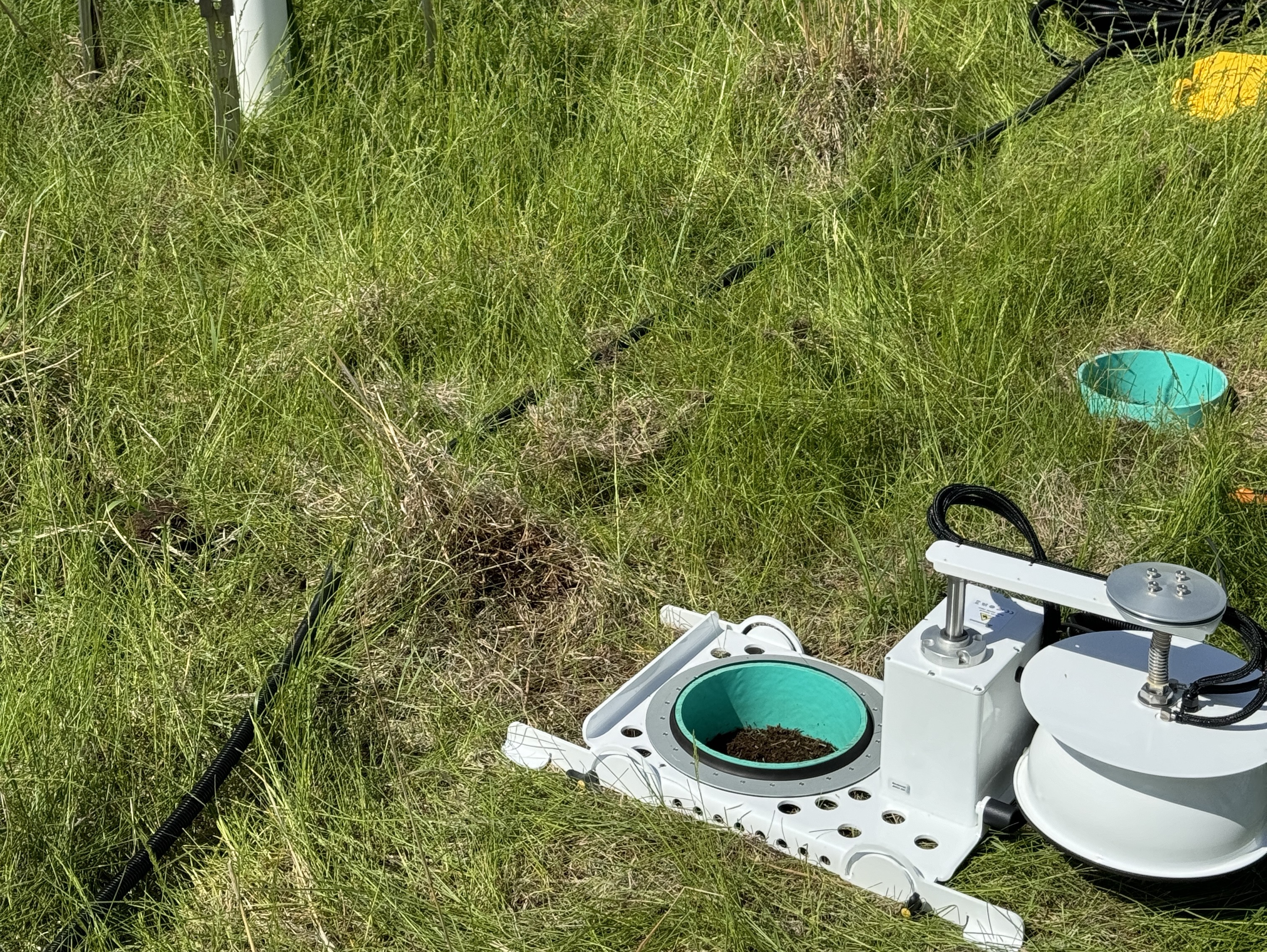
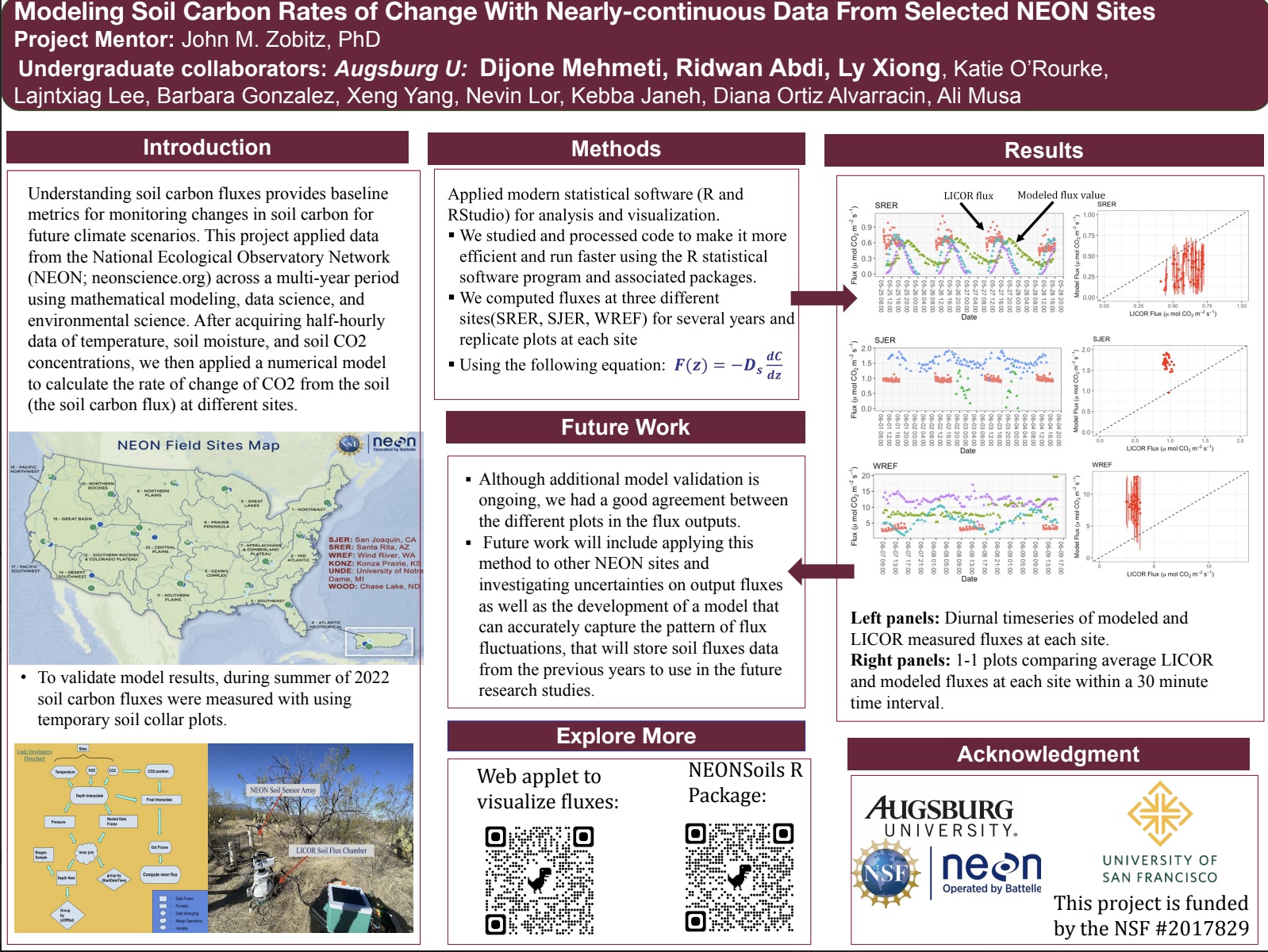
The goal of this research project was to acquire and analyze environmental measurements from different ecosystems across the United States to model rates of change of soil carbon dioxide. Understanding soil carbon fluxes provides baseline metrics for monitoring changes in soil carbon under future climate scenarios.
This project applied data from the National Ecological Observatory Network (NEON) across a multi-year period using mathematical modeling, data science, and environmental science. After acquiring half-hourly data of temperature, soil moisture, and soil CO2 concentrations, we applied a numerical model to calculate the rate of change of CO2 from the soil (the soil carbon flux) at different sites.
We studied and optimized code using R and its associated packages to make the workflow more efficient. A key challenge we addressed was filling in measurement gaps across variables used in the modeling process. To support interactive exploration, we developed a web app using Shiny: NEON Soil Flux Viewer. While further model validation is ongoing, we observed good agreement across flux outputs from various sites, highlighting the potential of this approach for ecological data analysis.